
AI Models
Space Bunny Alpha AI Model: Specs, API, Benchmarks and Real Use Cases
A practical guide to the Space Bunny Alpha AI model: 1M-token context, multimodal input, reasoning levels, API setup, benchmarks, risks and use cases.

Space Bunny Alpha AI Model: Specs, API, Benchmarks and Real Use Cases
The Space Bunny Alpha AI model is an anonymous preview model available through Space Bunny API under the ID space-bunny. Its headline specifications are unusually broad: a one-million-token context window, up to 524,288 completion tokens, text/image/video input, text output, tool calling, JSON responses, and five reasoning-effort levels. Those capabilities make it interesting for large-codebase review, long-document synthesis, visual analysis, and experimental agents.
The important qualifier is Alpha. The developer has not disclosed the model family, parameter count, training data, architecture, or knowledge cutoff. Preview pricing and availability may change. A large context window is capacity, not proof of perfect recall, and community guesses about the model's identity are not confirmation. This guide separates verified specifications from independent measurements and gives you a practical way to decide whether Space Bunny belongs in your workflow.
Short verdict: Space Bunny Alpha is worth testing when your task needs unusually large context, mixed media, coding, or tool calls. Treat it as an experimental dependency: set reasoning explicitly, validate every structured result, keep secrets out of prompts, and maintain a fallback.
Table of contents
- What is the Space Bunny Alpha AI model?
- Space Bunny Alpha specifications
- What the 1M-token context changes
- Multimodal input: text, images and video
- How the five reasoning levels work
- Space Bunny Alpha API tutorial
- Where the model is most useful
- Benchmarks and how to read them
- Who made Space Bunny Alpha?
- Limitations, privacy and production safety
- A practical evaluation plan
- Frequently asked questions
What is the Space Bunny Alpha AI model?
Space Bunny Alpha is a stealth reasoning model released as a public preview in September 2026. “Stealth” means the model provider operates the system without publicly naming the underlying model or organization during the preview. Space Bunny API supplies the routing and API layer; it explicitly does not claim to be the developer or owner.
The model uses an OpenAI-compatible chat-completions request shape. That makes it relatively easy to test with an existing server-side client: change the base URL, supply an Space Bunny API key, select space-bunny, and send a standard message history. You can begin in the Space Bunny playground before writing integration code.
Space Bunny is best understood as a multimodal understanding and reasoning model, not a media generator. It can read text, images, and supported video inputs, but it returns text. That text can be prose, code, a JSON object, or a tool-call request. Your application—not the model—remains responsible for permissions and external side effects.
If you want a shorter introduction before this technical review, read What Is Space Bunny?. The rest of this article focuses on evaluation, integration, and production judgment.
Space Bunny Alpha specifications
| Capability | Published specification | Practical meaning |
|---|---|---|
| Model ID | space-bunny |
Identifier sent to Space Bunny API |
| Context window | 1,000,000 tokens | Very large request-level working space |
| Maximum completion | 524,288 tokens | High output ceiling; use much smaller caps in most applications |
| Input | Text, image, video | Mixed evidence can be provided in one conversation |
| Output | Text | Prose, code, JSON text, or tool requests—not generated images/video |
| Reasoning effort | low, medium, high, xhigh, max |
Lets you trade speed and token use for deeper inference |
| Structured output | JSON object mode | Improves parseability but still requires schema validation |
| Tool use | tools, tool_choice, tool_calls |
The model can propose calls to functions you define |
| Streaming | Supported | Tokens can be delivered incrementally |
| Preview price | Listed at $0 per million input/output tokens | Useful for testing; not a permanent pricing commitment |
These are capability claims, not quality scores. “One million tokens” tells you what can fit, not whether the model will consistently retrieve a tiny fact from every position. “Tool calling” tells you the model can produce structured arguments, not that those arguments are safe. “JSON mode” reduces formatting friction, but valid JSON can still contain invalid business data.
The official Space Bunny documentation is the best place to confirm request fields before shipping, because an alpha model's limits and parameters can change quickly.

What the 1M-token context changes
A context window is the model's temporary working space for a request. It includes system instructions, conversation history, uploaded material, media representations, tool definitions, tool results, and the output budget. It is not long-term memory, and it is not a database.
One million tokens can hold a substantial software repository, many long reports, or a large archive of customer-support material. The main advantage is not “more text” by itself; it is the ability to keep evidence together. A repository review can include architecture notes, interfaces, implementation files, tests, logs, and an incident timeline without forcing each part into an isolated call. A policy review can compare all versions and appendices in one working set.
However, filling the entire window is usually a mistake. Larger prompts can increase latency, make failures expensive, dilute the important evidence, and make incorrect answers harder to debug. Long-context systems can also show position effects: information in the middle of a huge prompt may receive less useful attention than well-framed evidence near the task.
A better workflow is map, select, ask, verify:
- Map the corpus. Provide a directory tree, document index, date range, or source inventory.
- Select primary evidence. Put the most relevant files and the exact question first.
- Ask for traceability. Require file names, section headings, timestamps, or quoted field values for each conclusion.
- Verify the answer. Check the cited source instead of trusting fluent prose.
- Expand only when needed. Add secondary material after the model identifies a specific information gap.
Treat the million-token window as headroom that reduces artificial chunking, not as a target you must reach. In many tasks, a focused 30,000-token prompt will outperform an unstructured 600,000-token dump.
Multimodal input: text, images and video
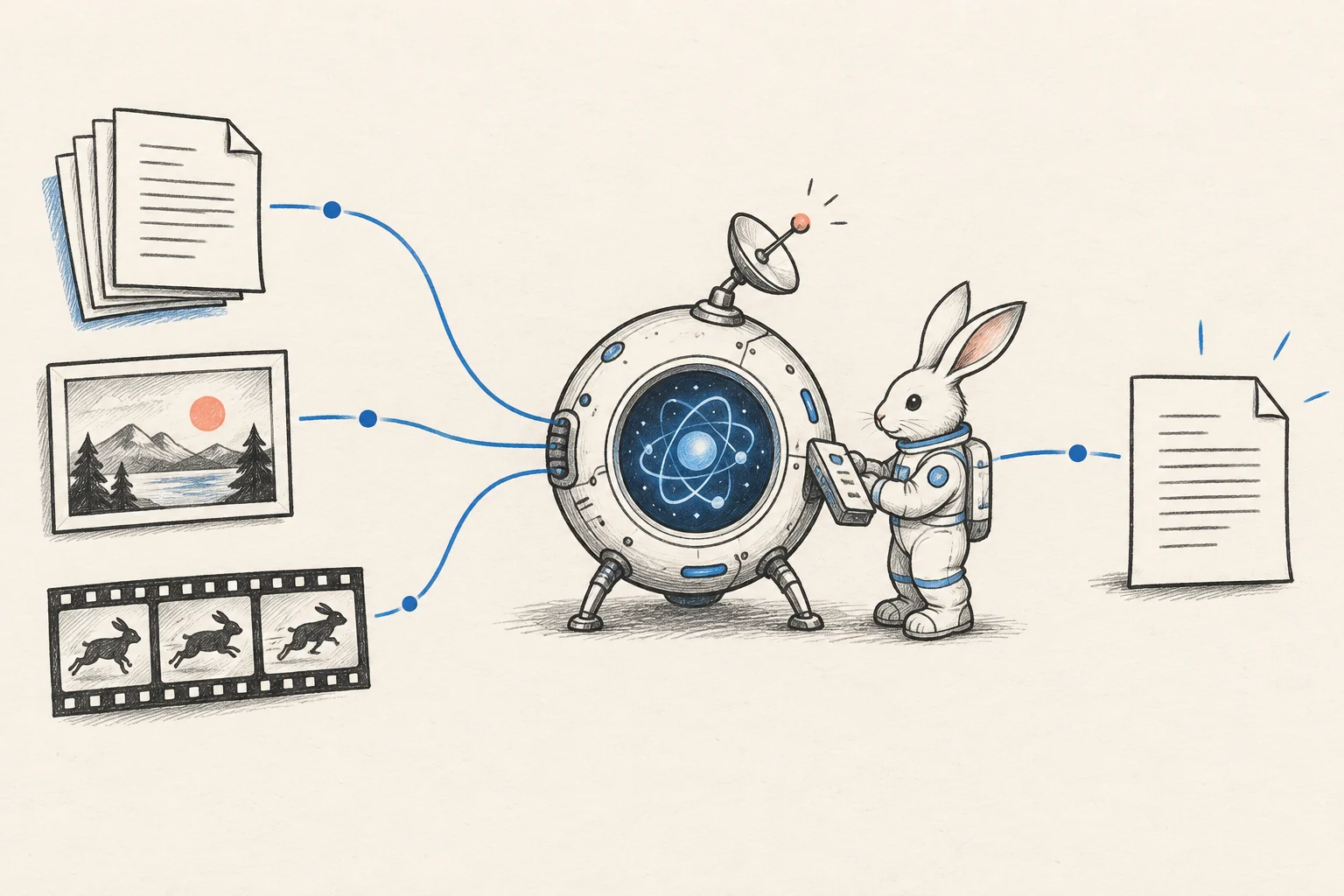
Space Bunny Alpha accepts text, images, and video as inputs in the same conversation. Images can be supplied through reachable URLs or supported base64 data URLs. Video support depends on the active provider route and the precise media format, so production teams should test duration, size, codec, URL accessibility, and timeout behavior rather than relying on a generic “video supported” label.
This combination is useful when the visual artifact alone is incomplete. Examples include:
- a UI screenshot plus the design requirements and accessibility checklist;
- an architecture diagram plus the relevant service interfaces;
- a product demo video plus acceptance criteria;
- a chart plus the source dataset and methodology notes;
- an error screenshot plus repository files and runtime logs.
Multimodal does not mean infallible vision. Ask the model to identify the visible element, region, frame, or timestamp supporting each finding. If a screenshot contains small text, provide the underlying copy separately. If a video matters, ask for timestamped observations and manually check the decisive frames. For regulated or high-impact decisions, media interpretation should be evidence for a reviewer, not the final authority.
How the five reasoning levels work
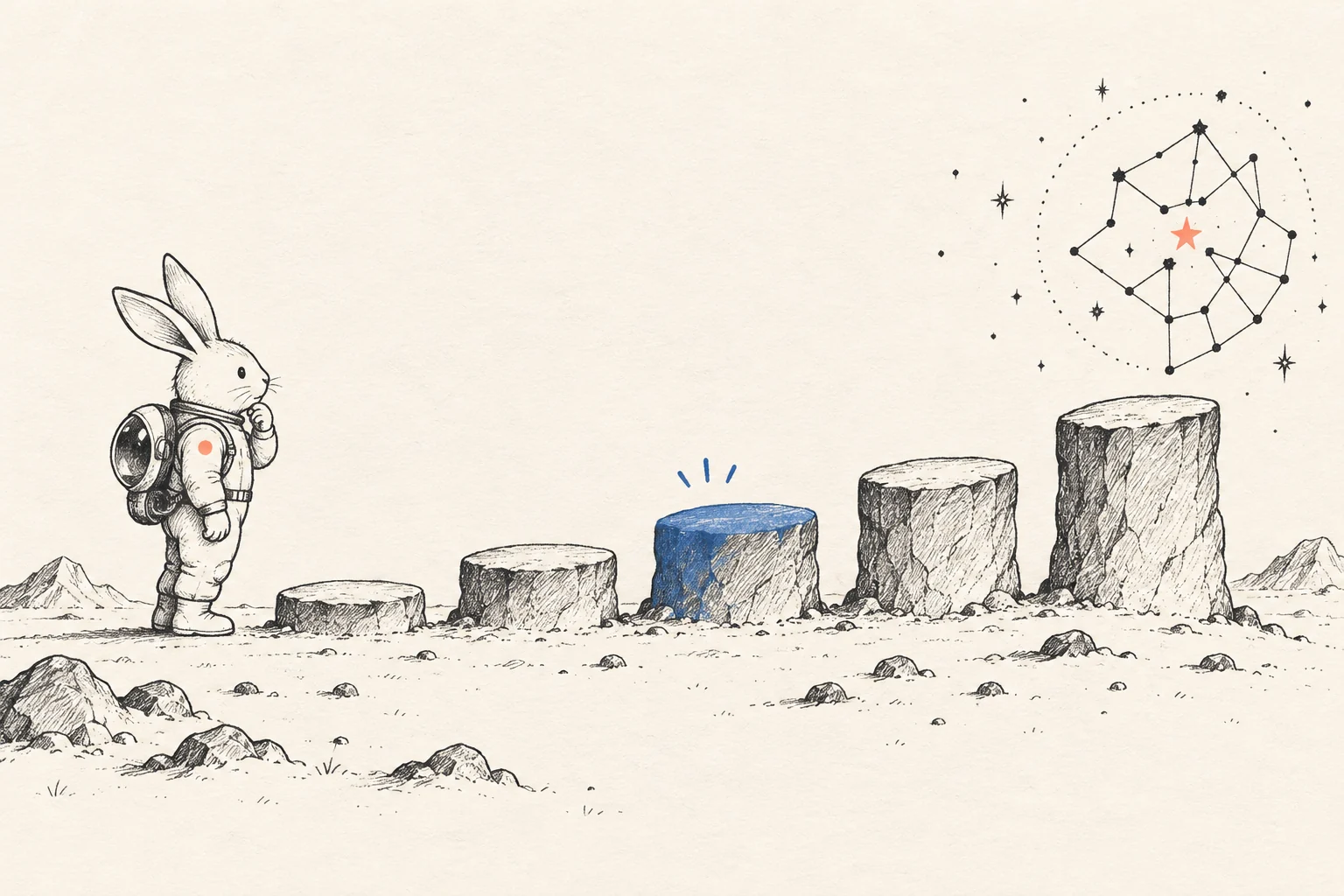
Space Bunny exposes five reasoning-effort settings: low, medium, high, xhigh, and max. Reasoning is mandatory for this model, and current documentation warns that the provider may default to max when no effort is supplied. Always set it explicitly.
The levels are best treated as a budget control rather than a quality ladder:
- Low: extraction, summarization, classification, rewriting, straightforward code explanation, and first-pass triage.
- Medium: comparison, multi-step synthesis, routine debugging, and planning with a few interacting constraints.
- High: architecture review, root-cause analysis, migration design, difficult coding, and risk analysis.
- Xhigh: hard cases where high effort demonstrably misses non-obvious interactions.
- Max: selected expert tasks where quality matters more than latency and you have measured a real benefit.
Higher effort may increase completion tokens and response time without improving an easy answer. Start low, evaluate against a rubric, then move up only if a lower level fails in a repeatable way. A production router can select effort by task class: low for extraction, medium for synthesis, high for architectural decisions, and human review for high-impact actions.
Space Bunny Alpha API tutorial
The API uses Space Bunny API's chat-completions endpoint. Keep the API key on your server. Do not expose it in client-side JavaScript, mobile bundles, public logs, screenshots, or prompts.
curl https://spacebunny.app/api/v1/chat/completions \
  -H "Authorization: Bearer $SPACE_BUNNY_API_KEY" \
  -H "Content-Type: application/json" \
  -d '{
    "model": "space-bunny",
    "messages": [
      {
        "role": "user",
        "content": "Review this migration plan. Separate confirmed risks from assumptions and propose the smallest safe rollout."
      }
    ],
    "reasoning": { "effort": "low" },
    "max_completion_tokens": 2000
  }'
For JSON output, set response_format and describe the expected keys in the prompt:
{
  "model": "space-bunny",
  "messages": [
    {
      "role": "user",
      "content": "Return one JSON object with summary, risks, steps and verification. Each risk needs severity and evidence."
    }
  ],
  "reasoning": { "effort": "medium" },
  "response_format": { "type": "json_object" }
}
The model is not currently advertised as enforcing an arbitrary JSON Schema. Parse the returned string, validate required properties and types, reject unknown actions, and apply business rules in code.
For tool calling, expose the smallest possible set of functions. A model-generated tool call is a proposal, not authorization. Before execution, verify:
- the authenticated user and tenant;
- that the function is allowed for the current workflow;
- argument types, allowed values, and resource ownership;
- rate limits and idempotency keys;
- whether the action writes, pays, deletes, publishes, or sends a message;
- whether a human approval is required.
Retry 429 and transient 5xx responses with exponential backoff and jitter. Do not retry malformed requests, permission errors, or unsafe tool arguments automatically. Cap output tokens even though the advertised maximum is huge, and log the model ID, effort level, latency, usage, and finish reason for later evaluation.
Where the model is most useful
1. Repository-scale engineering review
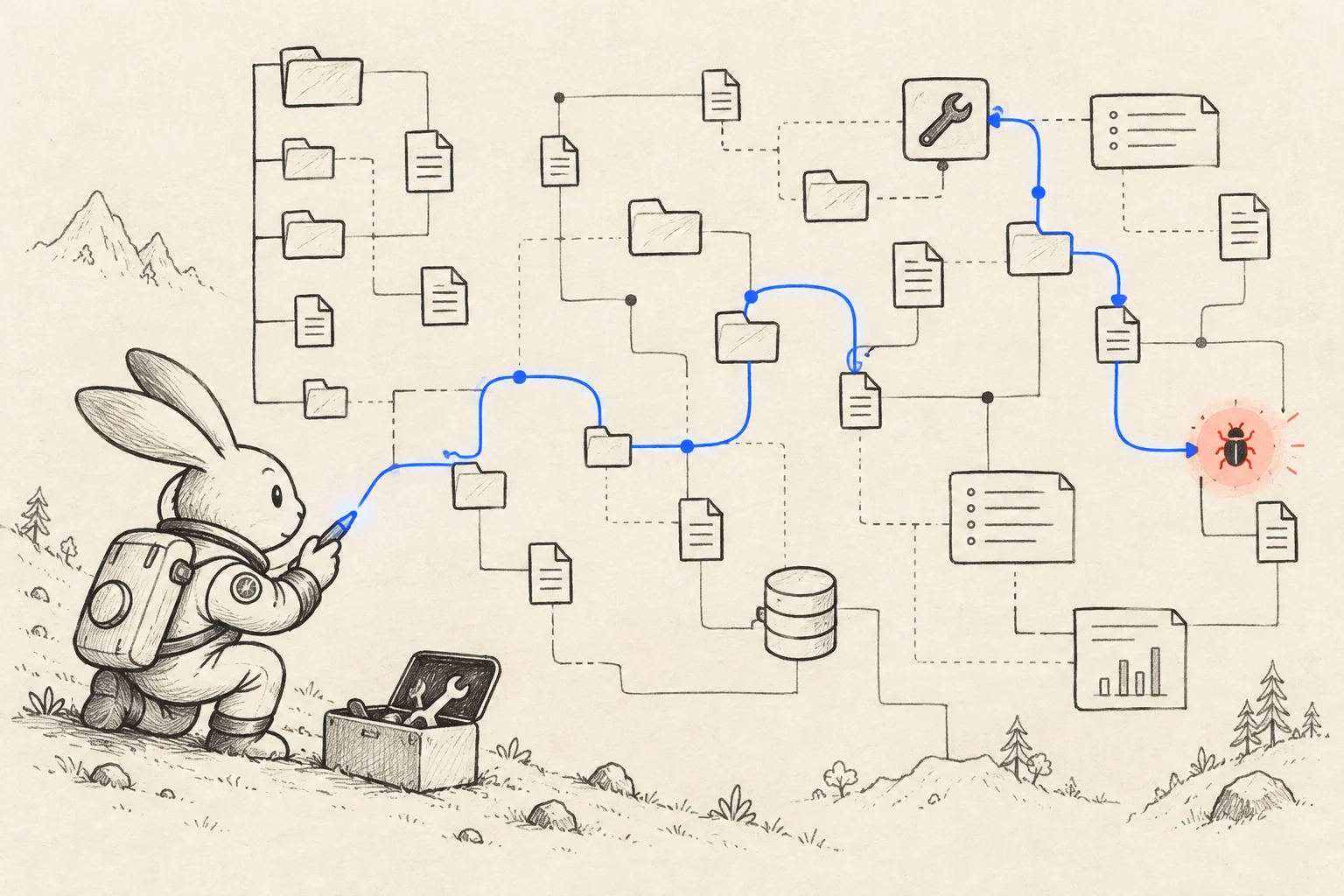
Space Bunny's context capacity is a strong match for codebase orientation, dependency tracing, incident review, and migration planning. Supply an architecture map and a scoped set of relevant files. Ask for evidence by path and symbol. The highest-value output is often not generated code but a short list of failure boundaries, assumptions, the smallest safe patch, and a verification plan.
2. Long-document synthesis
Instead of requesting a generic summary, ask for a decision artifact: a contradiction matrix, obligations by party, changes between versions, unanswered questions, or evidence grouped by claim. Require citations to document and section. This makes the result reviewable and reduces the temptation to accept a smooth but unsupported narrative.
3. Multimodal product and incident analysis
Screenshots, diagrams, and video can be combined with requirements, code, or logs. This is useful for interface audits, demo-to-test-plan conversion, diagram-to-implementation checks, and incident reconstruction. The text context helps explain what the visual evidence means; the visual input grounds the text in what actually appeared.
4. Structured research and planning
JSON mode can produce normalized research notes, launch checklists, risk registers, or test cases for downstream systems. Keep the schema small, and never let a JSON field bypass application validation merely because it parsed successfully.
5. Guarded agents
Tool calling supports search, record lookup, file retrieval, calculators, and other bounded actions. Read-only tools are the safest starting point. For writes, present a preview and require deterministic permission checks. The model may choose a tool; your code decides whether the call is legal and whether it executes.
Space Bunny is less compelling for a tiny deterministic task, a latency-critical autocomplete, or a workflow that requires a publicly documented training policy and stable provider identity. The best model is the one that meets the real constraint, not the one with the largest context number.
Benchmarks and how to read them
Independent field tests reported by SpaceBunnyAlpha.com include 82.0% on a 60-question GPQA Diamond subset, 75% on MMLU-Pro, 46.1% on a 300-question subset of Humanity's Last Exam, and 7.0/10 on AI BENCHY. These numbers are useful signals, but they are not one universal ranking.
The evaluation setups differ in subset size, prompt, reasoning effort, tools, scoring rules, and dates. A subset score should not be compared directly with a full benchmark result from a model card. A model may also score well on knowledge questions while failing your repository conventions, tool schema, language, latency target, or refusal requirements.
Use published benchmarks to form hypotheses:
- the GPQA result suggests testing difficult scientific reasoning;
- MMLU-Pro suggests broad academic and professional knowledge;
- HLE suggests testing expert-level questions rather than only easy prompts;
- AI BENCHY's reported strengths in extraction and tool calling suggest those workflows deserve evaluation.
Then build a private benchmark from your work. Twenty carefully chosen cases—with normal, ambiguous, incomplete, and adversarial inputs—usually tell you more about production fit than a leaderboard. Record correctness, citation quality, format validity, latency, token usage, and reviewer effort. Run at least two reasoning levels and compare against your existing model or human baseline.
Who made Space Bunny Alpha?
The provider is not publicly confirmed. Space Bunny API describes Space Bunny Alpha as a third-party stealth model and says it is not the developer, owner, or provider. Public information does not establish the architecture, parameter count, training method, data sources, or knowledge cutoff.
Community investigators have proposed MiniMax- and OpenAI-related hypotheses based on tokenizer behavior, prompt signatures, self-reports, and output style. None of those clues proves ownership. Models can imitate style, self-identify incorrectly, share infrastructure patterns, or receive wrapper prompts that distort fingerprints.
For practical decisions, label the field provider: undisclosed and design for replacement. Do not make compliance, purchasing, or security claims based on a rumor. If provider identity or documented data governance is mandatory, wait for disclosure or choose a model with the required documentation.
Limitations, privacy and production safety
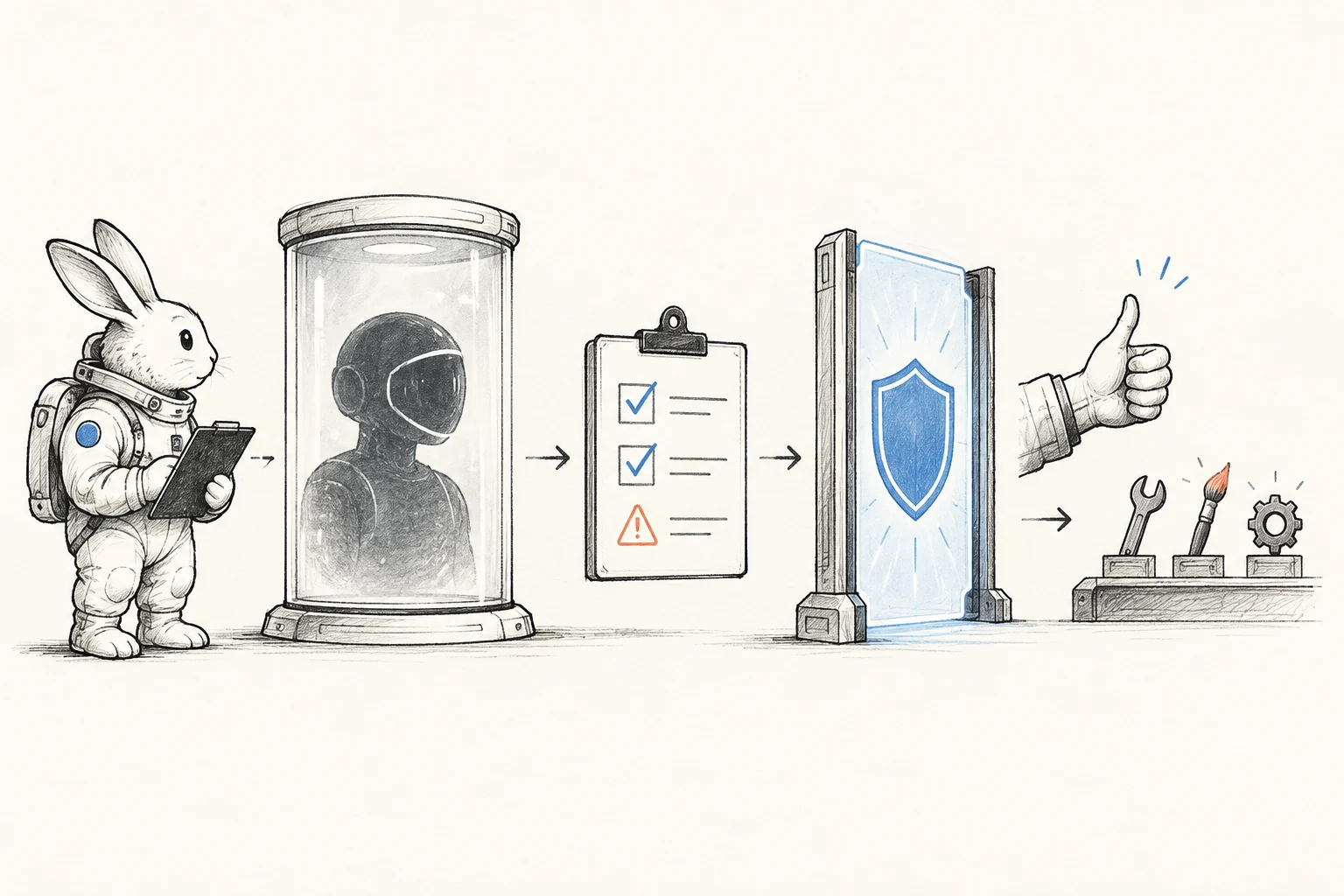
Space Bunny API currently states that prompts and completions for this model may be retained by the provider but are not used for training, with other use governed by the Stealth Model Terms. Policies can change, and an anonymous provider makes due diligence harder. Read the active terms before sending customer data, source code, credentials, health information, financial records, or regulated content.
The main risks are straightforward:
- Preview instability: behavior, capacity, price, or availability can change without the guarantees of a mature model line.
- Unknown provenance: the model's developer and training details are undisclosed.
- Hallucination: long context does not prevent invented facts, false citations, or missed evidence.
- Context dilution: irrelevant material can reduce answer quality even when it technically fits.
- Media ambiguity: small labels, rapid video events, or inaccessible URLs may be misread or skipped.
- Structured-output errors: valid JSON may still violate your schema or business constraints.
- Tool risk: generated arguments may target the wrong resource or request an unauthorized action.
- Operational lock-in: a free preview can disappear, throttle, or become paid.
Use a server-side boundary, redact secrets and personal data, restrict tools, validate outputs, cap requests, set timeouts, and keep a fallback. Require explicit human approval for payments, deletion, publication, permission changes, external messages, or irreversible operations. The Space Bunny pricing page can help you compare current playground and credit options, but verify live terms at decision time.
A practical evaluation plan
You can evaluate Space Bunny Alpha in a day without pretending that one demo proves anything.
- Choose one workflow. Examples: investigate incidents, review pull requests, extract contract obligations, or convert product demos into test cases.
- Create 20–50 representative cases. Include easy, difficult, ambiguous, incomplete, and adversarial examples.
- Define a scoring rubric before testing. Measure correctness, cited evidence, omissions, unsafe actions, JSON validity, latency, token use, and reviewer time.
- Establish a baseline. Run the current model or current human process on the same cases.
- Test focused and large context. Compare a curated prompt against a much larger corpus. Extra context must earn its latency and complexity.
- Test low, medium, and high effort. Find the lowest setting that reliably crosses your acceptance threshold.
- Exercise failure paths. Include broken media, missing files, contradictory documents, invalid tool arguments, rate limits, and timeouts.
- Red-team authority boundaries. Try prompt injection inside documents and tool results. Confirm that application code—not the model—enforces permissions.
- Run the fallback. Verify that the workflow degrades safely if the route is unavailable.
- Repeat after changes. Alpha behavior can move. Store prompts, expected outputs, date, model ID, and effort so results are reproducible.
A good production decision is not “the answer looked smart.” It is “the model improved this measured workflow, and its failures were detectable, recoverable, and acceptable.” You can explore candidate prompts on the Space Bunny website and then move the successful ones into a controlled evaluation harness.
Frequently asked questions
Is Space Bunny Alpha an AI model or a website?
Space Bunny Alpha is the anonymous AI model listed on Space Bunny API as space-bunny. SpaceBunny.app is an independent product site offering a playground, documentation, examples, and usage options around the model.
Is the Space Bunny Alpha AI model free?
Space Bunny API currently lists the preview at $0 per million input and output tokens, subject to account and rate limits. SpaceBunny.app also offers a free playground and separate credit packs. “Free preview” should not be treated as permanent pricing.
Does Space Bunny Alpha really support one million tokens?
The published context window is 1,000,000 tokens. Usable space must include all messages, media representations, tool definitions, tool results, and completion budget. Capacity does not guarantee perfect retrieval across the entire window.
Can Space Bunny Alpha analyze images and video?
Yes. It accepts text, image, and video input and returns text. Image URLs must be reachable, and video compatibility can depend on the active provider route. Validate the exact media format and ask for timestamped or region-specific evidence.
Can it generate images or video?
No image or video output is listed. It can analyze those inputs and produce text, code, JSON, or tool requests.
Is Space Bunny Alpha good for coding?
Its long context and tool support make it promising for repository review, debugging, migration planning, and agentic coding. “Good for coding” still depends on your languages, framework, repository conventions, tests, latency, and acceptance criteria. Evaluate it on real tasks before adopting it.
Is Space Bunny Alpha made by MiniMax or OpenAI?
There is no official confirmation. Public fingerprinting has produced hypotheses, not proof. Treat the provider as undisclosed until the model operator or routing platform publishes verified information.
What reasoning effort should I use?
Start with low. Move to medium or high only when your evaluation shows a repeatable quality gain. Reserve xhigh and max for difficult tasks where the extra latency and tokens are justified.
Is Space Bunny Alpha safe for production?
It can be tested in production-like workflows, but it is an anonymous alpha preview. Use strict data controls, validation, tool permissions, observability, human approval for high-impact actions, and a fallback model. Organizations requiring disclosed provenance may need another option.
Final assessment
The Space Bunny Alpha AI model is compelling because several valuable capabilities appear in one endpoint: an exceptionally large context window, multimodal understanding, adjustable reasoning, JSON output, and tools. That combination can simplify experiments that otherwise require heavy chunking or multiple specialized models.
Its uncertainty is equally important. Identity is undisclosed, benchmark evidence is early, provider retention may apply, and preview economics can change. The right response is neither hype nor dismissal. Test it on a narrow, valuable workflow; demand evidence in every answer; measure the lowest useful reasoning level; and keep application code in control.
If Space Bunny improves your own evaluation set and you can contain its failures, it may be a useful model today. If provider transparency, fixed behavior, or contractual guarantees are hard requirements, keep it in the lab until those questions have better answers.